


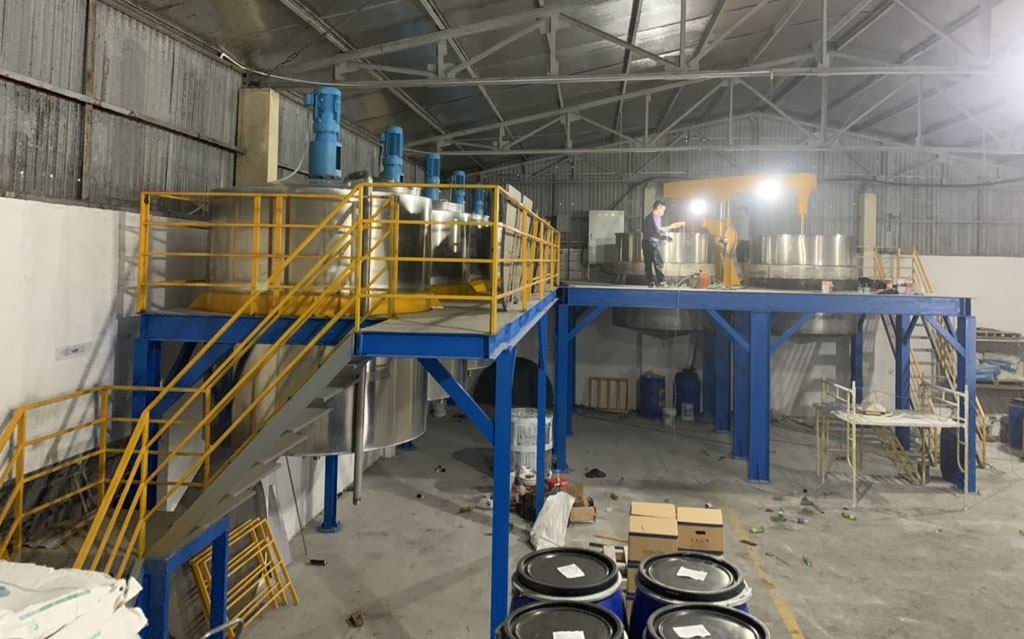
Raw Materials for Paint Production
Basically, water-based paint is produced from key raw materials such as water, pigments, additives, and more.
Specifically:
- Binders are materials that help hold all types of pigments together and form a film that adheres to the surface of the substrate. The type of binder used varies depending on the paint, but it must ensure good adhesion, strong bonding, and durability.
- Pigments are responsible for giving color and coverage to the paint. In some paints, the color also directly affects gloss and durability. Pigments are generally classified into organic and inorganic types. Inorganic pigments typically produce darker, more muted tones but provide high coverage and excellent color stability.
- Organic pigments are brighter and more vibrant but usually have lower coverage and less color durability.
- Pigments are a crucial component in paint production.
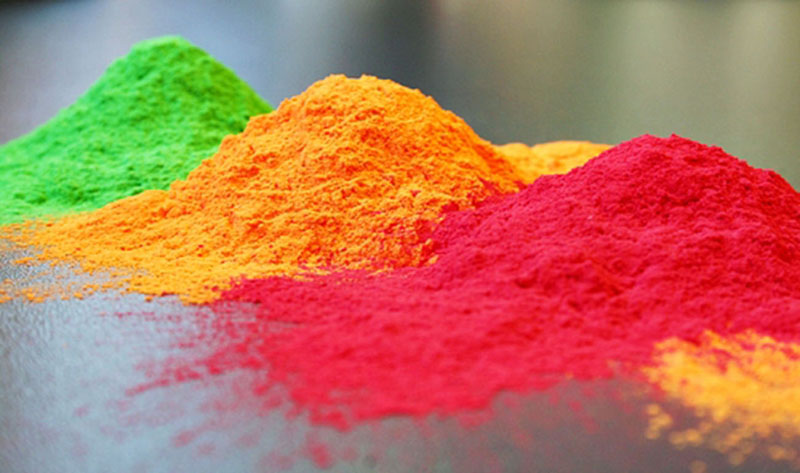
Pigment is a very important component of paint
- Additives are used in very small amounts in paint. They are typically added to enhance usability, improve preservation, and modify the properties of the paint film.
- Solvents: Depending on the resin characteristics in the paint, manufacturers decide which type of solvent should be used for that particular paint.
Ngoài ra, một số loại sơn còn sử dụng bột độn để giúp cải tiến một số tính chất của sơn như độ bóng, độ cứng,…. hoặc cải thiện khả năng thi công và kiểm soát độ lắng của sơn.
Water-Based Paint Production Process
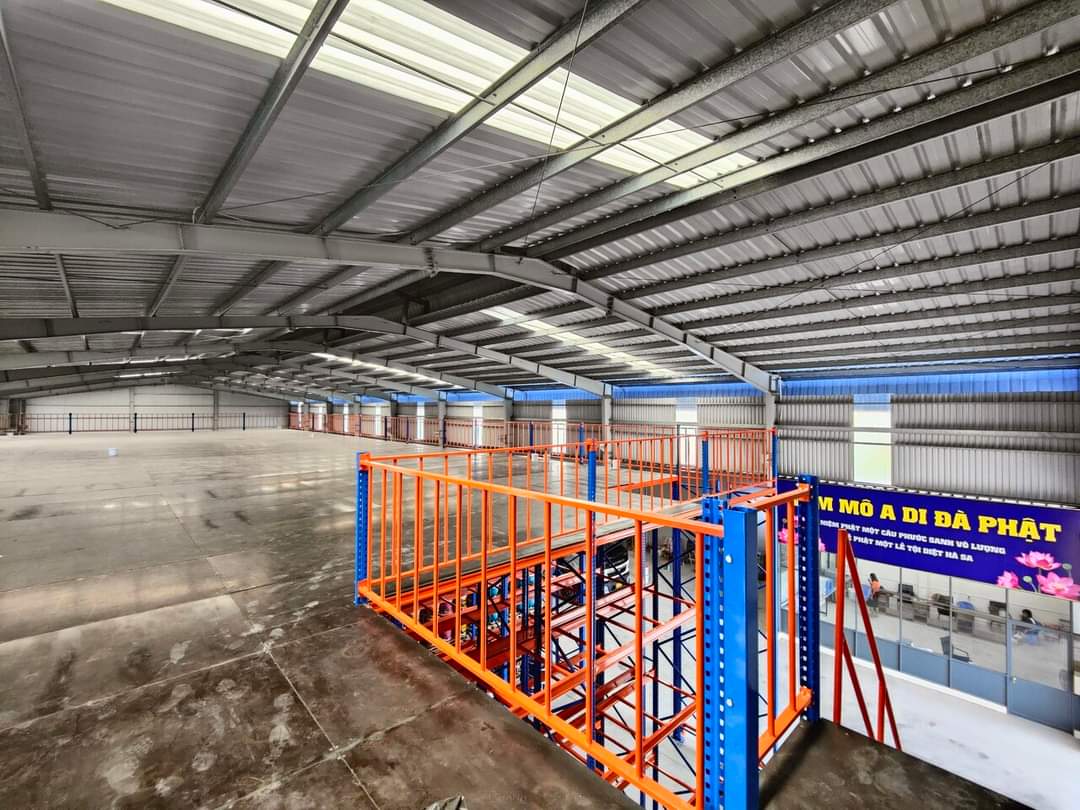
Each type of paint may include a few additional steps in the production process depending on its characteristics and intended use. However, the basic production process generally follows these five main steps:
Step 1: Pre-Mixing (Soaking)
In this step, key raw materials such as pigments, extenders, additives, binders, and organic solvents are added into a pre-mixing tank and stirred at low speed. The mixture is then allowed to soak for several hours to ensure thorough wetting of the solvents and binders, forming a thick paste that is ready for the next stage of production.
Step 2: Grinding
Grinding is the main stage in water-based paint production and largely determines the final paint quality.
- First, the pre-mixed raw materials are transferred into a paint grinding machine.
- During grinding, the mixture is processed into a fine, smooth liquid solution. Modern production lines typically use both vertical and horizontal pearl mill grinders. The choice of grinder depends on the desired viscosity of the pre-mixed materials and the type of paint being produced.
- Grinding time depends on the type of pigment, extender, and the required fineness of the paint. Care must be taken to prevent overheating, which could cause solvent evaporation and negatively affect the mixture. Most manufacturers use cooling water at 5–7°C during this stage to control the temperature.
Step 3: Paint Blending
Once the paint reaches the required fineness, it is transferred to a blending tank equipped with continuous agitators. Multiple batches may be blended in the same tank. Additional binders, solvents, and additives are added in precise proportions according to the specifications of each paint type.
Step 4: Filtering
Filtering removes any remaining impurities from the paint, separating sludge and wastewater. Once the paint achieves a uniform consistency, the product is considered complete.
Step 5: Packaging
Packaging is the final step of the paint production process. Depending on the factory scale and production volume, paint can be packed automatically or manually. Packaging containers are typically plastic or metal drums, depending on the brand. Finished paint drums are then transferred to the storage warehouse, where strict procedures are followed. Warehouses are equipped with fire prevention and safety measures to ensure secure storage.
Additional Support Processes
Beyond the five main steps, producing a finished drum of paint also involves several meticulous auxiliary processes:
- Cleaning: Cleaning paint containers and equipment is crucial to ensure the quality of the final product. The choice of cleaning method—water or solvent—depends on the raw materials and the type of paint being produced.
- Cooling: Cooling is carefully integrated with the grinding process. Water is circulated through a cooling system to reduce the temperature to around 7°C before entering the grinder.
- Solvent Recovery: During production, some solvents are released when cleaning equipment. These are collected and distilled to recover clean solvents for reuse. Modern paint manufacturers often use vacuum distillation to ensure safety and prevent fire hazards.
The above provides information on the water-based paint production process according to commonly used high-tech standards. For any feedback or questions, you can leave a comment or contact ASA directly.
If you are looking to start your own water-based paint business with your own brand, contact ASA Group today for the best consultation and guidance!
- Hotline: 036.8866.999
- Email: asagroup2014td@gmail.com